
Testing and DebuggingA search interface can display an older result even when every request succeeds. Reproduce the ordering problem with controlled promises, then use a request counter to keep only the latest result on screen.
Read article · 4 min↗
Testing and DebuggingA practical guide to tracing errors and setting breakpoints in original JavaScript files after a build tool bundles or minifies them. Includes a small local exercise and a checklist for missing or misleading source maps.
Read article · 4 min↗
Testing and DebuggingA stack trace shows the path JavaScript took to reach an error. Learn how to read its frames, reproduce a failure, follow values back to their source, and handle less obvious traces from asynchronous and bundled code.
Read article · 5 min↗

Testing and DebuggingA practical guide to tracing browser requests, distinguishing HTTP errors from connection failures, and checking response bodies and headers when an interface receives the wrong data.
Read article · 4 min↗
Testing and DebuggingLearn a repeatable way to investigate JavaScript bugs in browser DevTools. Follow a small example from an unexpected result to a fix using breakpoints, stepping controls, the call stack, and variable inspection.
Read article · 4 min↗
Testing and DebuggingA bug report becomes more useful when it identifies an input, an expected result, and an actual result. Follow a small JavaScript example from reported failure to failing test, focused fix, and lasting regression coverage.
Read article · 4 min↗
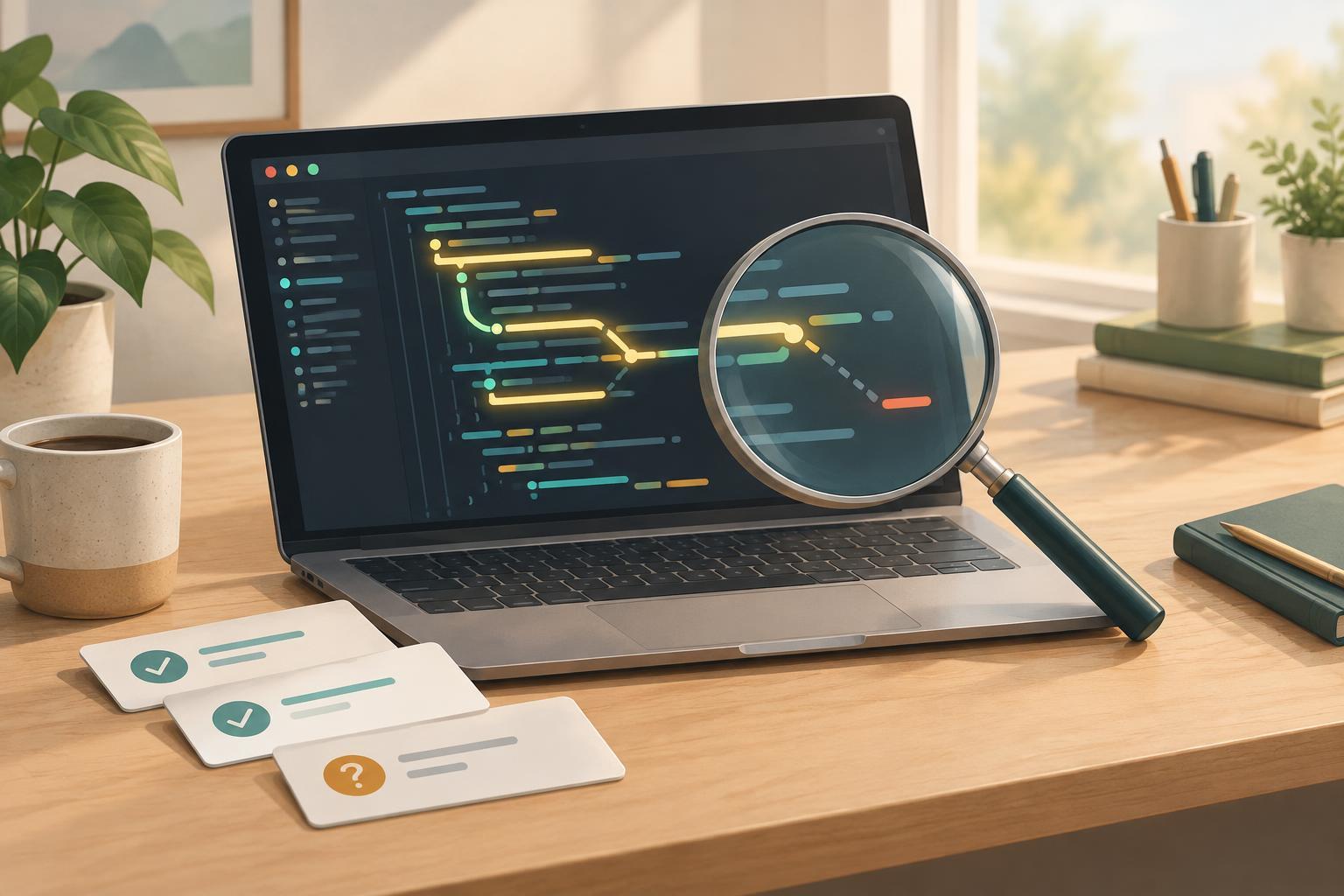
Testing and DebuggingCoverage reports show which code ran during a test suite, not whether the tests checked the right behavior. Learn how to read common coverage measures, investigate gaps, and use the report to guide better tests.
Read article · 4 min↗
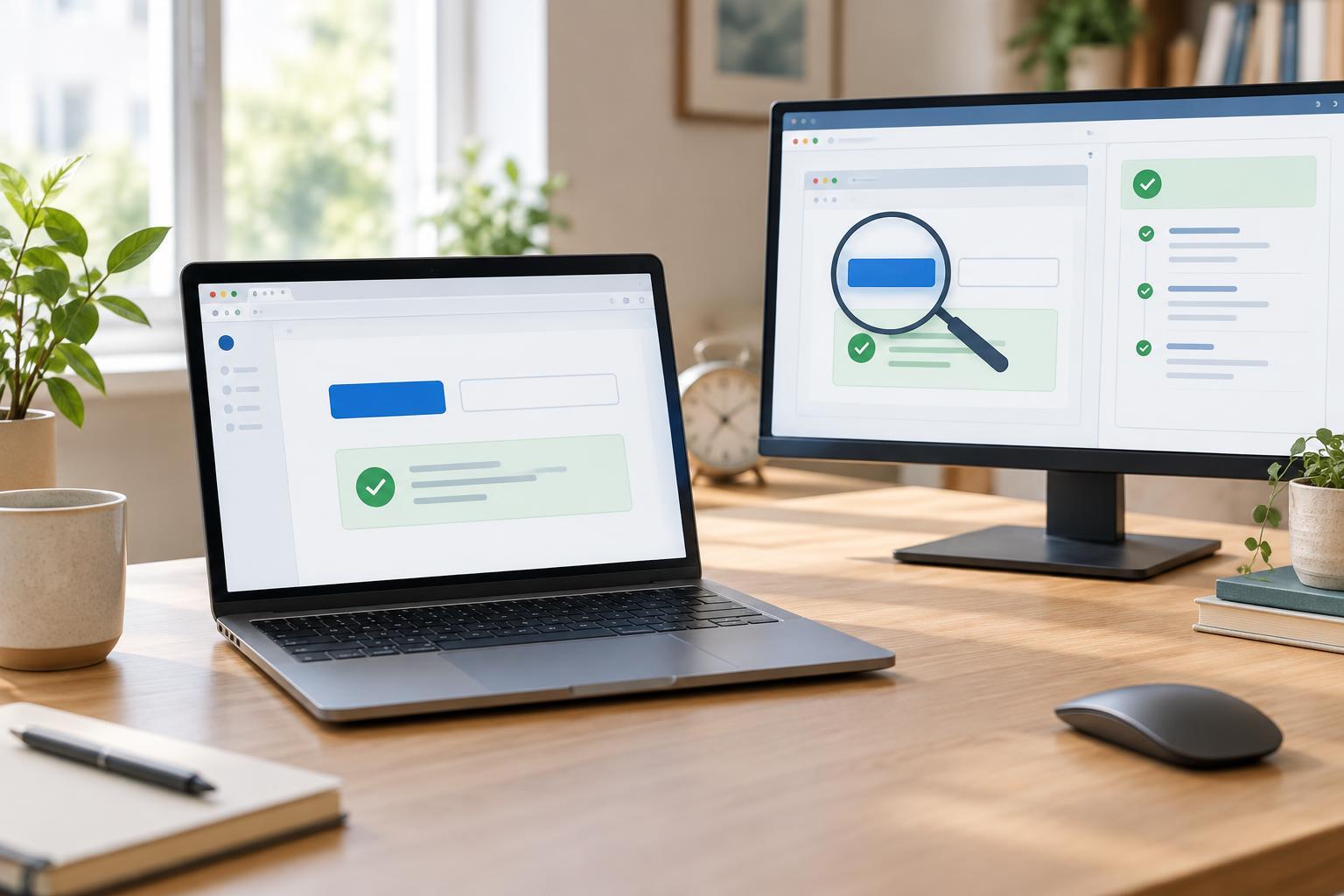
Testing and DebuggingEnd-to-end tests become less fragile when they identify controls by meaningful attributes and wait for observable results instead of elapsed time. Learn how to choose selectors, handle asynchronous updates, isolate test data, and diagnose failures with a practical Playwright example.
Read article · 4 min↗

Testing and DebuggingA practical way to decide whether a web feature needs a unit, integration, or end-to-end test, using a searchable list as an example. Learn what each level can prove, where to place test doubles, and how to keep the suite useful.
Read article · 4 min↗

Testing and DebuggingA practical way to test a component is to start with what a user can do, then check what appears on the page. Build a small counter in the browser and use it to test initial state, clicks, cleanup, and the limits of automated interaction.
Read article · 3 min↗
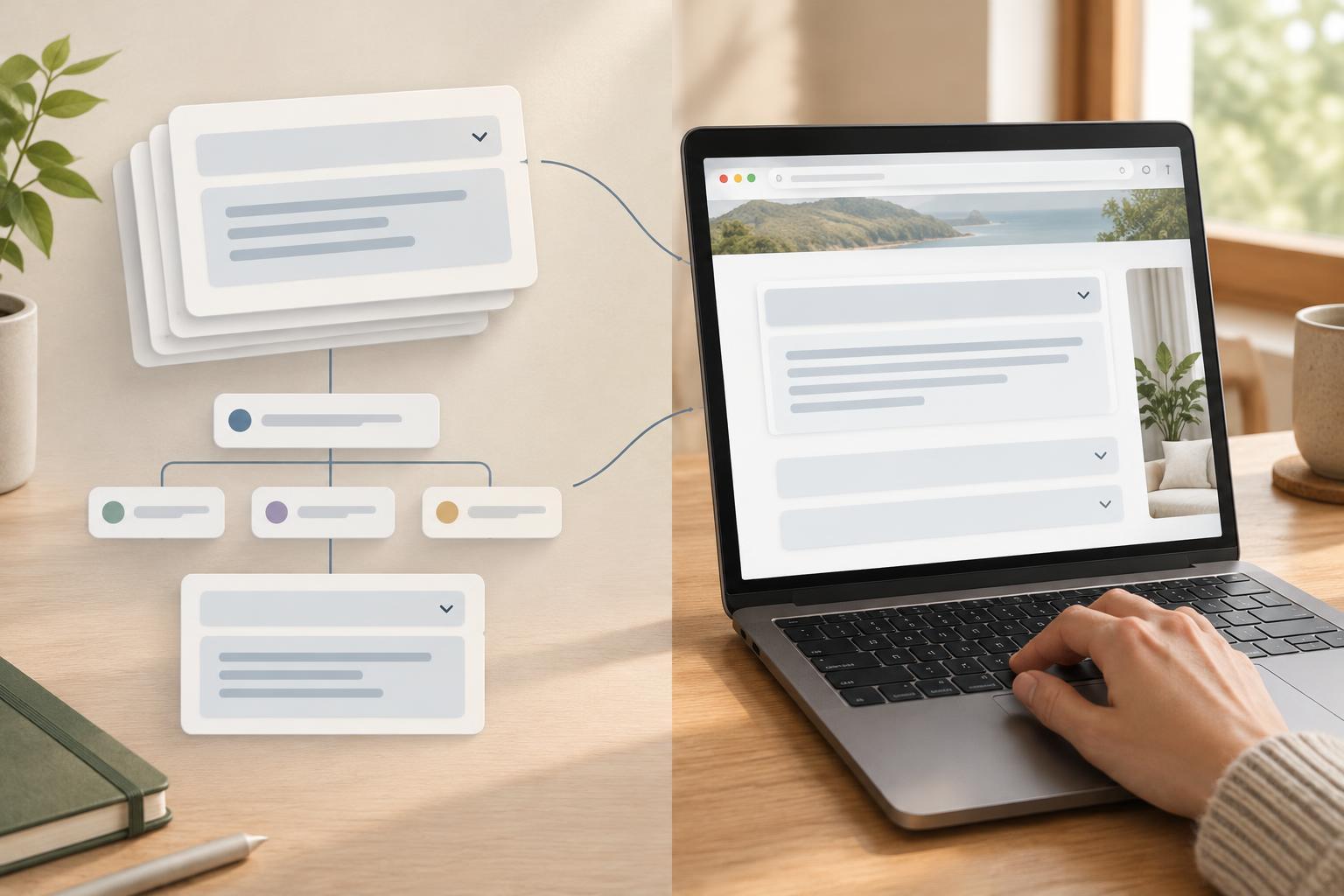
Testing and DebuggingDOM tests give fast feedback on interface logic, while real-browser tests check behavior that depends on layout, input, and browser rendering. Learn where each belongs, using a disclosure component as a practical example.
Read article · 4 min↗
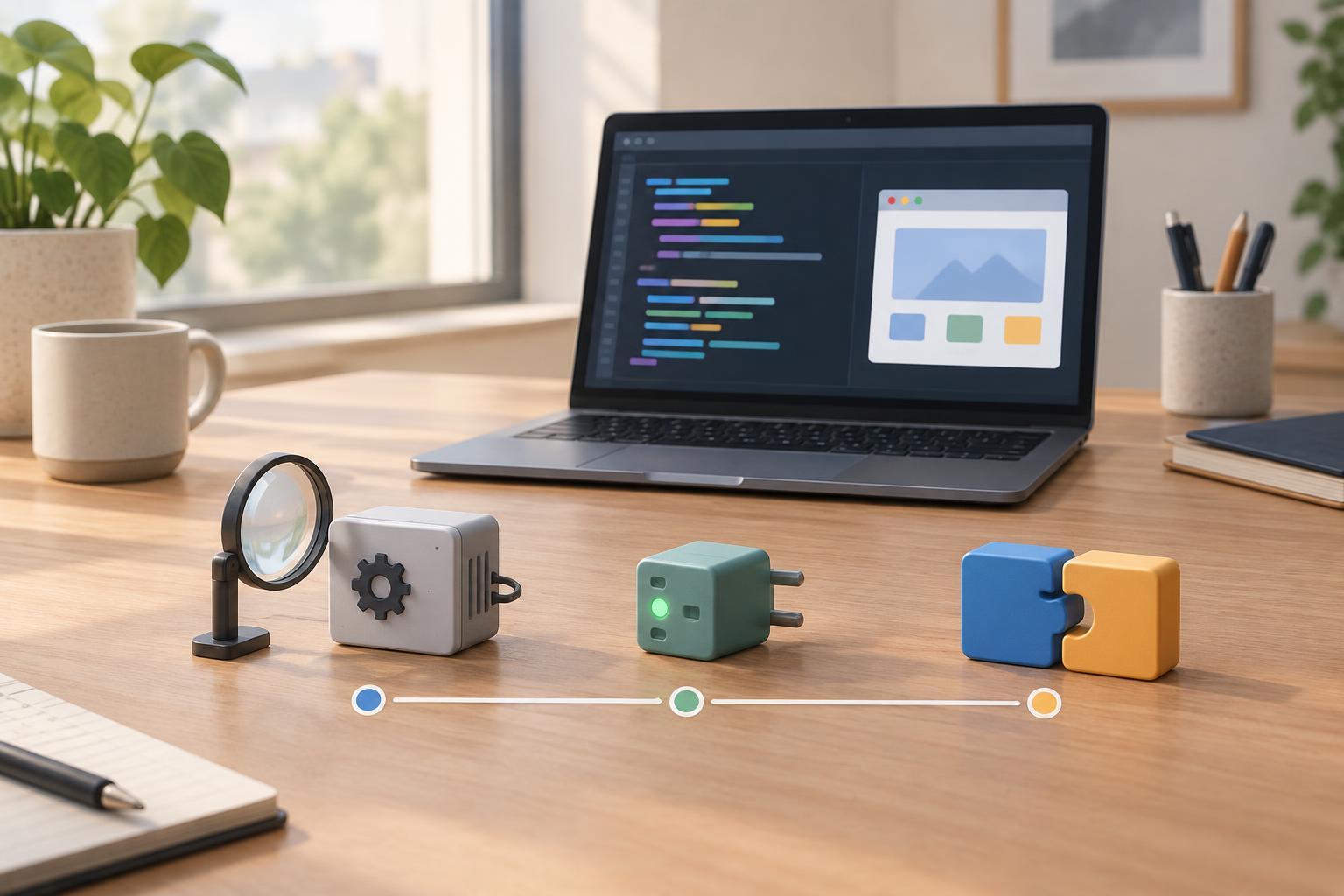
Testing and DebuggingA test double should answer a specific question, not imitate an entire dependency. Learn when to observe a real function with a spy, supply a predictable result with a stub, or enforce an interaction with a mock, using a small JavaScript example.
Read article · 4 min↗
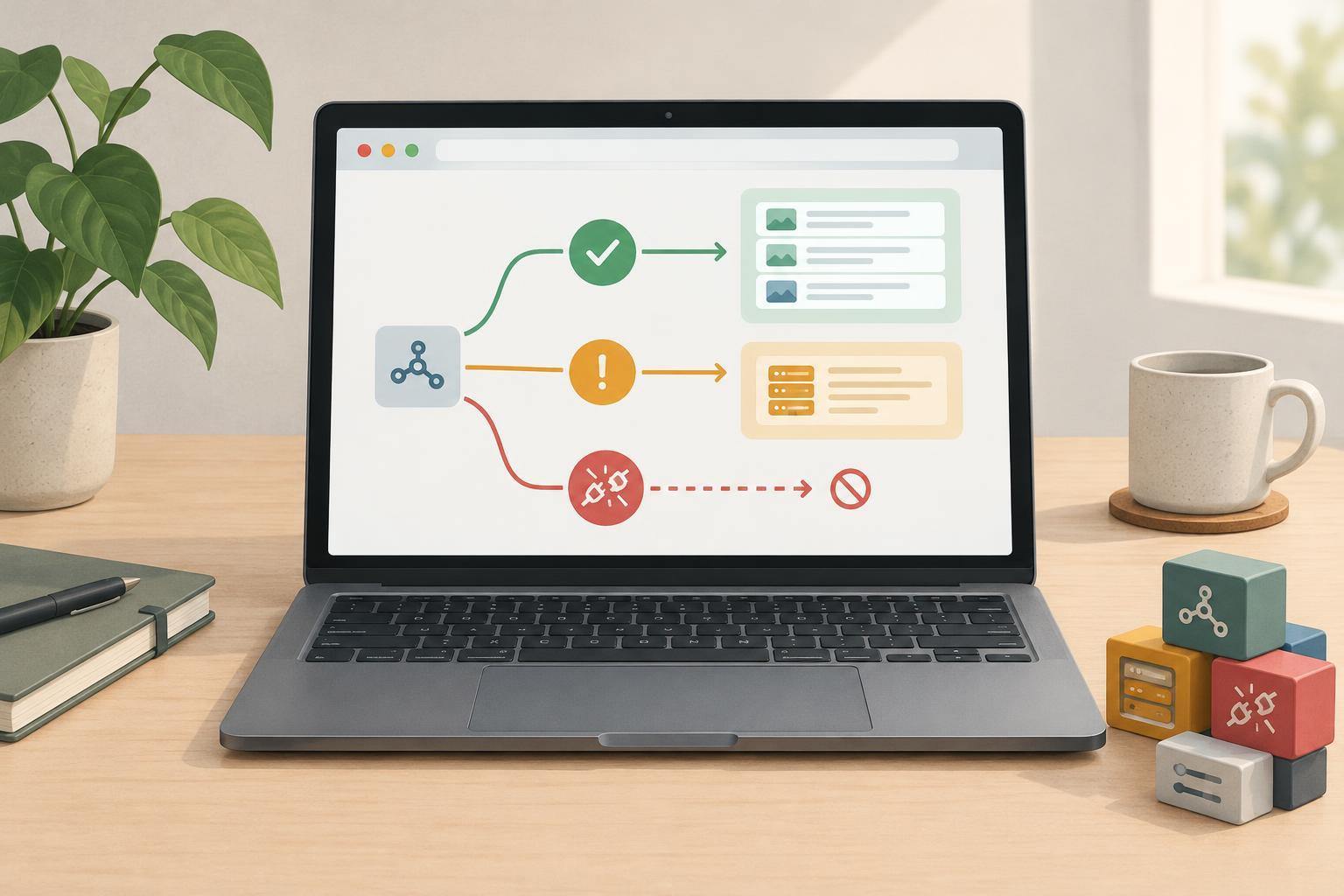
Testing and DebuggingA small injectable fetch function makes three important outcomes easy to test: a successful response, an HTTP error response, and a rejected request. Follow a reproducible example using Node’s built-in test runner.
Read article · 4 min↗

Testing and DebuggingFake timers let you test debouncing, delayed updates, and other timer-driven behavior without making your test suite wait. Learn how to advance time deliberately, check boundary conditions, handle promises, and restore the real clock after each test.
Read article · 3 min↗

Testing and DebuggingPromise tests need to observe both outcomes: a fulfilled value and a rejected promise. Learn how to use Node.js’s built-in test runner to await results, assert errors, and avoid tests that pass before asynchronous work finishes.
Read article · 3 min↗
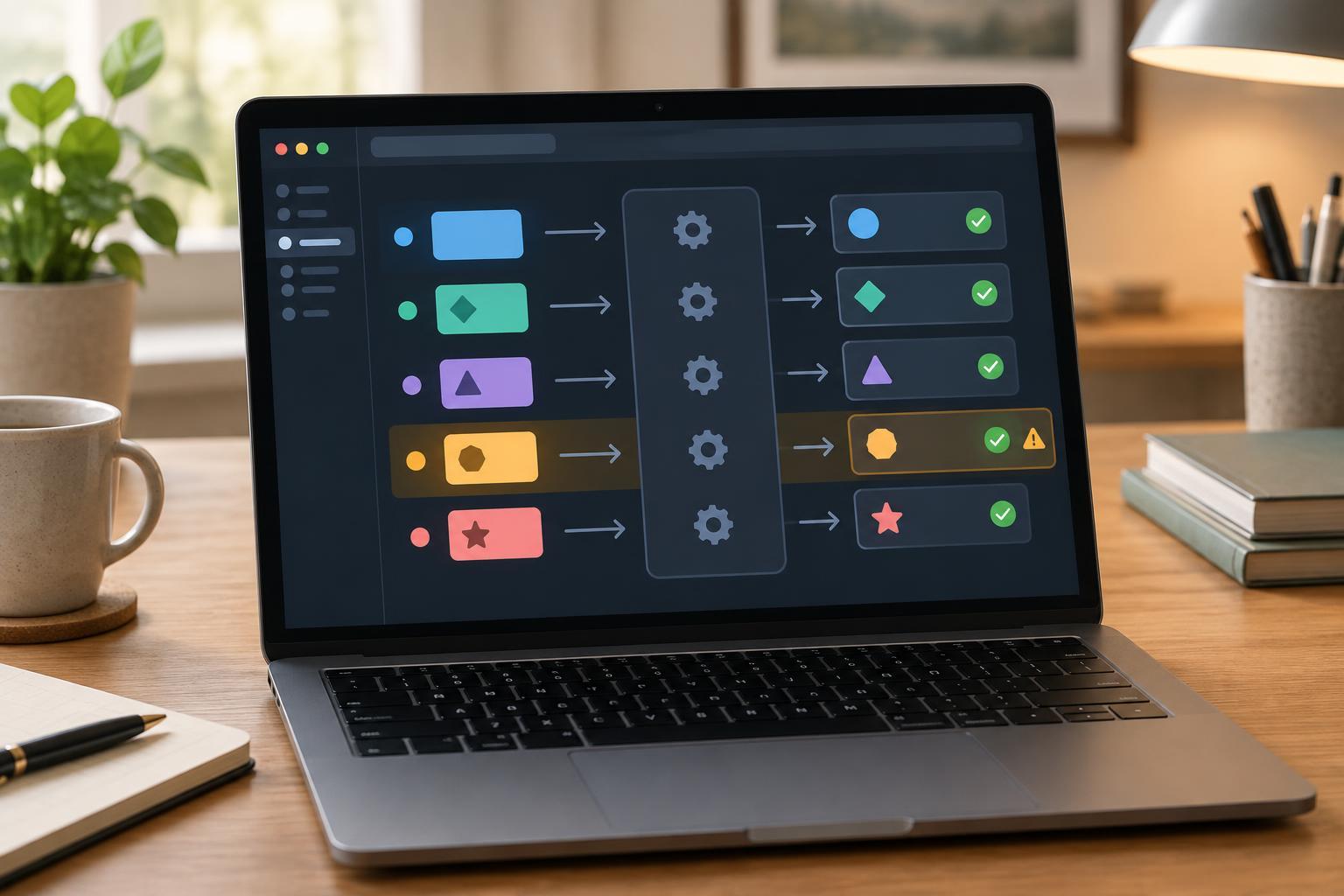
Testing and DebuggingParameterized tests run the same assertion with a table of inputs and expected results. Learn how to write them with Node.js, choose useful cases, and keep failures easy to diagnose.
Read article · 3 min↗
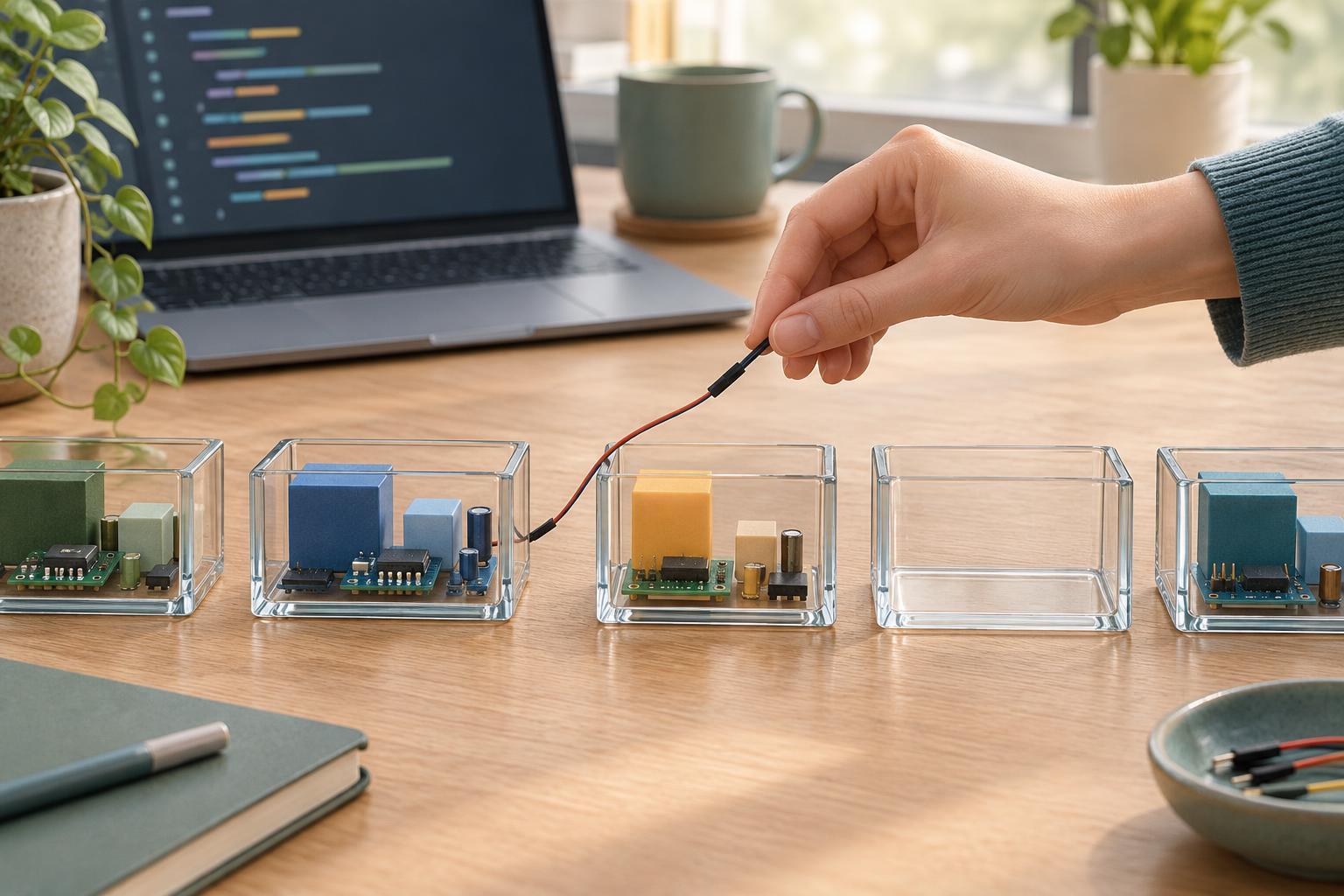
Testing and DebuggingA test should pass whether it runs alone or alongside the rest of the suite. Learn when to reset shared values, how to remove listeners and timers after a test, and why creating fresh state for each test is often the stronger design.
Read article · 4 min↗

Testing and DebuggingA function can pass every typical example and still fail at its limits. Learn how to turn a small input contract into focused tests for boundary values, malformed input, and nearby valid cases, using only Node.js and its built-in test runner.
Read article · 4 min↗

Testing and DebuggingA practical way to structure JavaScript tests so their setup, behavior, and expectations are easy to follow. Build a small fixture, test a calculation, and learn when to keep setup inside the test.
Read article · 4 min↗

Testing and DebuggingA useful test tells you which behavior broke, not which line of code changed. Learn how to assert observable results, choose the right level of detail, and write failure messages that speed up debugging without making refactoring painful.
Read article · 4 min↗
Testing and DebuggingCreate a small JavaScript function, test it with Node.js’s built-in test runner and strict assertions, then use a failing test to understand what the result tells you. No testing package or project setup is required.
Read article · 4 min↗